
Google Ads for HVAC Companies: Fill Your Service Calendar

HVAC is one of the best-fit industries on Google Ads because intent is unambiguous and the tickets are big. An emergency service call runs $450 to $1,200, a system install runs $5,000 to $15,000, and maintenance contracts compound into multi-year customer relationships. WordStream’s 2024 Google Ads benchmark data shows the Home & Home Improvement industry averages a $6.96 cost per click and an 8.62% search conversion rate — numbers that work comfortably against HVAC ticket sizes when the campaign is built correctly.
But HVAC is also unforgiving. Demand is sharply seasonal, emergency searches convert in minutes, and the difference between “ac repair” and “ac repair cost” is the difference between a booked job and a wasted click. This guide covers how to build Google Ads campaigns that generate service calls — the right keywords, landing pages with click-to-call as the hero, conversion tracking that counts real jobs, and the seasonal playbook that most HVAC contractors miss — applying our complete Google Ads guide for small businesses to the specifics of heating and cooling. Whether you run one truck or twenty, the fundamentals are the same: be there when the AC dies, with a page that turns a panicked homeowner into a booked appointment.
Why HVAC Google Ads Are Different
HVAC advertising is defined by seasonality, emergency intent, and geographic tightness. Most industries don’t see a 4x swing in demand between July and October — HVAC does.
Summer heatwaves and winter cold snaps drive concentrated bursts of emergency searches. “AC repair near me” and “furnace not working” queries convert within hours because the homeowner has no choice — their house is 95 degrees or 45 degrees and they need someone on site today. That urgency pushes emergency keyword costs to the top end of home services — DataForSEO keyword data compiled by Nopio shows “emergency ac repair” running $35–$60 per click and “ac repair near me” at $28–$45 in competitive cities. Those costs look brutal until you remember a single emergency ticket is $450 to $1,200 and often converts into a maintenance contract worth thousands more.
HVAC is also geographically tight in a way legal and professional services aren’t. A technician has a 30-minute drive radius before the economics fall apart. That means your campaigns should run on tight geo-targeting — typically a 20 to 30 mile radius around your shop, not a full metro or state. Every click from outside your service area is dead money.
The final structural difference is lifetime value. A customer who calls for a $450 repair often signs a maintenance agreement, then calls you for their next install five years later. CallRail’s home services data consistently shows phone calls outperform form submissions for HVAC intent — people with broken systems pick up the phone. That changes how you build landing pages and track conversions, which we’ll get to below.
The Right Keywords for HVAC Google Ads
Target emergency repair keywords at the top of your bid strategy, maintenance and installation keywords at efficient costs, and commercial queries only if you service them. Broad terms like “HVAC” waste budget.
Keyword intent in HVAC maps directly to ticket size and urgency. An emergency repair search is a now-or-never lead. An installation search is a considered purchase that may take weeks to close. A “how much does a new furnace cost” search is almost never a customer — it’s a researcher who will call three other companies before deciding.
High-intent emergency keywords include “ac repair near me,” “emergency furnace repair [city],” “ac not cooling,” “no heat [city],” and “hvac repair [city].” These should get your top bids because they convert fastest and the caller has no leverage to shop around.
Installation and replacement keywords like “new ac installation [city],” “furnace replacement [city],” and “heat pump install [city]” carry high ticket value but longer sales cycles. Bid efficiently and make sure your landing page supports financing information.
Maintenance keywords like “ac tune up [city]” and “furnace maintenance [city]” are cheap per click and build the customer base that funds next year’s emergency work.
| Service Line | Example Keyword | Cost Per Click | Avg. Cost Per Lead |
|---|---|---|---|
| AC Repair (Emergency) | “ac repair near me” | $28–$45 | $231 |
| Heating Repair | ”furnace repair [city]“ | $22–$38 | $144 |
| AC Maintenance | ”ac tune up [city]“ | $10–$18 | $86 |
| AC Installation | ”new ac installation [city]“ | $15–$40 | $157 |
| HVAC General | ”hvac contractor [city]“ | $12–$25 | $198 |
CPC ranges from DataForSEO keyword data via Nopio. Cost-per-lead benchmarks from SearchLight Digital’s January 2026 analysis across 816 HVAC and plumbing contractors.
Negative keywords are critical in HVAC. Add “diy,” “repair cost,” “how to,” “thermostat,” “parts,” “salary,” “school,” “certification,” and “filter” to your negative list on day one. Without them you’ll pay $30 a click for homeowners who just want to replace a filter themselves.
Use exact match and phrase match keywords for emergency intent, and reserve broad match — if any — for long-tail installation terms where you want Google’s algorithm to surface queries you haven’t thought of.
Landing Pages That Convert HVAC Leads
Every HVAC ad should land on a dedicated page with a phone number as the hero, not your homepage. For HVAC, the phone call is the conversion — and the majority of your leads will never fill out a form.
HVAC leads are overwhelmingly phone-driven — Invoca’s call tracking research found that 84% of consumers call a business after running an HVAC search, and CallRail’s home services data reports 60% of customers prefer to call after finding a business online. A homeowner with a broken AC in July isn’t filling out a contact form and waiting for an email. They’re tapping the phone number. That means your landing page needs to make calling obvious and frictionless: a tap-to-call phone number in the header, a sticky mobile call button, and a secondary “schedule online” option for non-emergency traffic.
Your HVAC landing page needs five elements: a headline matching the search intent (“AC Not Cooling? Same-Day Service in [City]”), a massive tap-to-call phone number above the fold, a service area map or list of cities served, trust signals (licensed, insured, BBB-rated, NATE-certified technicians where applicable), and real photos of your trucks and team — not stock photography. Manufacturer certifications from Trane, Carrier, Lennox, or Mitsubishi carry weight with homeowners comparing contractors.
What your landing page should not have: full site navigation, links to every service page you offer, or an “About Us” block above the fold. When your landing page and ads are connected — same keywords, same messaging, same intent — your conversion rate climbs and your Google Quality Score improves, which lowers your cost per click across the account.
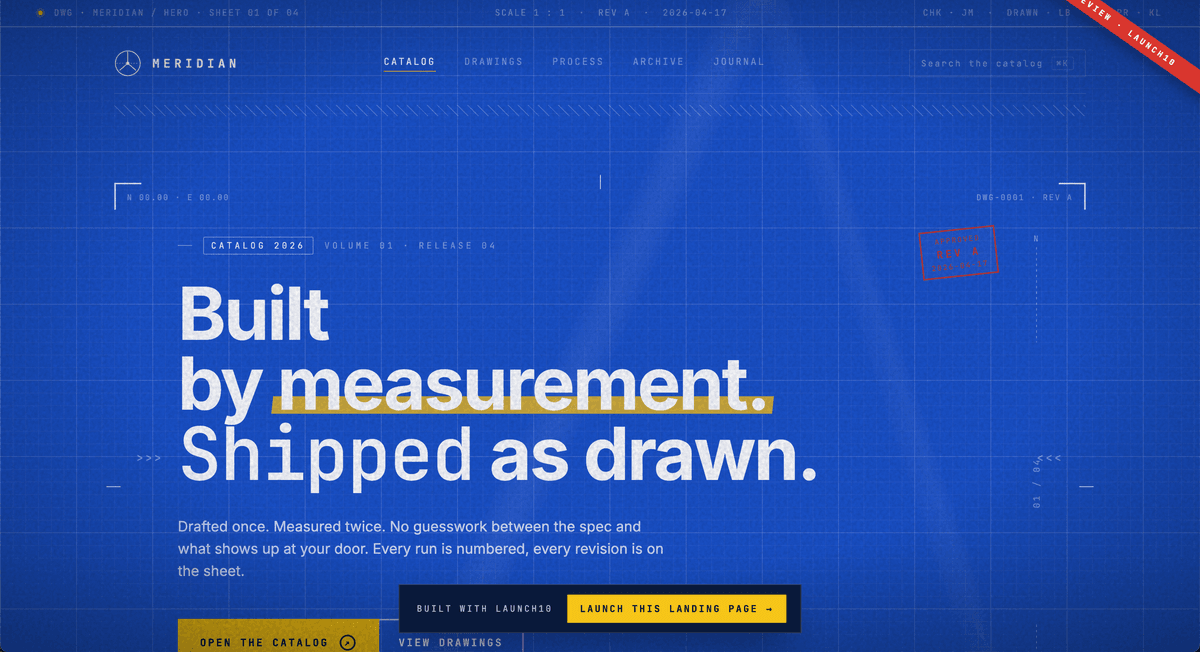
Run separate landing pages for emergency repair versus installation. The CTA for “ac repair” is “Call Now for Same-Day Service.” The CTA for “new ac installation” is “Get a Free In-Home Estimate.” Same company, different page, dramatically different conversion rates.
Conversion Tracking for HVAC
Without call tracking, HVAC Google Ads is flying blind. If 70% of your leads come by phone and you’re only tracking form fills, you’re measuring the wrong 30% of your campaign.
Conversion tracking for HVAC has three components: form submissions (for estimate requests), phone calls (tracked via a Google forwarding number or third-party call tracking platform), and click-to-call taps on mobile. Every one needs to fire back to Google Ads so the algorithm optimizes toward the clicks that actually produce jobs.
Set your call conversion minimum duration to 60 seconds. Anything shorter is almost always a hang-up, wrong number, or telemarketer — and if you count those as conversions, Google will happily send you more of them. At 60 seconds you’re capturing conversations where the homeowner actually engaged with your dispatcher.
Use a dedicated call tracking platform like CallRail or CallTrackingMetrics for attribution beyond Google’s built-in tracking. These platforms assign a unique tracking number to each traffic source, record the calls, and pass keyword-level attribution back to Google Ads. If you run ServiceTitan or Housecall Pro, integrate the call tracking with your dispatch system so you can follow a click through to a booked job and a paid invoice — that’s the data that tells you which keywords actually fund your business, not just which ones make the phone ring.
Proper tracking is also how you diagnose why your Google Ads are underperforming. If you can’t see keyword-level conversion data, you can’t fix the campaign — and you’ll keep paying for “free ac estimate” clicks that never close.
Seasonal Campaign Playbook for HVAC
HVAC demand runs on a predictable annual cycle. Budget allocation by season is one of the biggest levers that most HVAC contractors miss.
Summer (June–August) — AC Emergency Season. This is your biggest spend period. “AC not cooling,” “ac repair near me,” and “emergency ac service” queries spike with every heatwave. Allocate 35-40% of your annual budget here. Push bids aggressively on emergency keywords, use ad scheduling to run 24/7 during heatwaves, and make sure your after-hours dispatch can actually answer. A 3am call from a customer with a dead AC is a $600 ticket if you answer, a zero if you don’t.
Fall (September–November) — Furnace Tune-Up Season. Shift budget toward maintenance keywords: “furnace tune up,” “heating system inspection,” “hvac maintenance plan.” Tune-up leads convert at high rates because the homeowner is planning ahead, and every tune-up is a sales opportunity for a replacement system. Allocate 20-25% of annual spend here.
Winter (December–February) — No-Heat Emergency Season. Similar playbook to summer, shifted to furnaces and heat pumps. “Furnace not working,” “no heat emergency,” and “furnace repair [city]” are the priority terms. Allocate 25-30% of annual budget. Cold-weather emergencies have even less patience than summer — homeowners will call the first company that answers.
Spring (March–May) — AC Prep and Installation Season. Two plays run in parallel: AC tune-ups ahead of summer, and installation campaigns for homeowners who survived one more winter on a dying system. Allocate 15-20% of annual spend. This is your best window for installation campaigns because homeowners have time to compare quotes and arrange financing before the first 90-degree day.
Adjust these allocations to your climate. A Phoenix HVAC company spends more on AC year-round; a Minneapolis company spends more on heat.
Common Mistakes HVAC Companies Make
Most HVAC Google Ads campaigns fail for the same four reasons. Fix these and you’ll outperform the majority of competing contractors in your metro.
Bidding on “free HVAC estimate” without qualifying intent. “Free estimate” searches attract price shoppers who will call every company in town. Bid on these only with a landing page that pre-qualifies — minimum project size, service area checks, financing prompts — so your dispatcher isn’t burning hours on tire-kickers.
No negative keywords. HVAC has an unusually long negative keyword list because the industry overlaps with DIY content, training, and parts retail. “Diy,” “repair cost,” “how to fix,” “thermostat,” “filter,” “parts,” “school,” “certification,” “salary,” and “jobs” should all be negatives from launch day. Skipping this step can waste 20-30% of your budget.
Broad geographic targeting. HVAC techs have a 30-minute drive radius before job economics collapse. If your ads run across a full state or metro, you’re paying for clicks from homeowners you’d have to turn down if they called. Set a tight radius around each truck’s home base and use location bid adjustments to favor the ZIP codes closest to your shop.
No call tracking. If you can’t see which keywords produce phone calls — and which calls produced booked jobs — you can’t optimize the account. You’re guessing. Call tracking is the single biggest fix for underperforming HVAC campaigns.
How Launch10 Helps HVAC Businesses
Launch10 builds your entire Google Ads campaign — landing page, ads, call tracking — the same day, starting at $59/month. That replaces agency retainers that typically run HVAC companies $1,500 to $5,000 per month.
You describe your business in plain English: “HVAC company in Charlotte, NC. We do residential AC repair, furnace service, and system installations. Licensed, insured, NATE-certified technicians, 24/7 emergency service.” Launch10’s purpose-built AI generates an HVAC-specific landing page with click-to-call as the hero CTA, a Google Ads campaign with emergency and maintenance keywords targeted to your service area, and call tracking auto-configured so every phone lead is attributed back to the keyword that produced it. Your pages are also structured to get cited when homeowners ask Gemini, ChatGPT, Claude, or Perplexity for HVAC recommendations — so you get found whether they search Google or ask AI.
| Launch10 | HVAC Marketing Agency | DIY Google Ads | |
|---|---|---|---|
| Monthly Cost | $59/mo | $1,500–$5,000/mo | $0 (your time) |
| Annual Cost | $708 | $18,000–$60,000 | $0 + wasted spend |
| Setup Time | Same day | 2–4 weeks | 20–40 hours |
| Landing Page | Included | Usually extra | Build yourself |
| Call Tracking | Automatic | Usually included | You configure |
| AI Search Citations | Optimized automatically | Not offered | You figure it out |
| Seasonal Tuning | Built-in | Their call | Your call |
| Contract | Cancel anytime | 6–12 month typical | N/A |
For most HVAC contractors, one booked install covers a full year of Launch10.
For the broader seasonal playbook — how to structure maintenance plans, smooth shoulder-season demand, and measure which dollars produce booked jobs across peak and off-peak months — see our HVAC marketing guide.
Related reading
- HVAC marketing playbook — broader lead-gen playbook for HVAC operators across all channels
- Google Ads for plumbers — adjacent home-services vertical with shared seasonality patterns
- Why your Google Ads aren’t generating leads — foundational diagnostic for underperforming campaigns
Frequently asked questions
How much should an HVAC company spend on Google Ads?
What is a good conversion rate for HVAC Google Ads?
How do I track phone calls from my HVAC Google Ads?
Should HVAC companies bid on competitors' names?
Are Google Ads worth it for a new HVAC company?

Co-Founder & CEO, Launch10
Greg Hockenbrocht is the Co-Founder and CEO of Launch10. Before Launch10, he was on the executive leadership team at Fundera through its acquisition by NerdWallet, where he led Growth & New Ventures following the company's IPO. Through Illuminated Ventures and work with founders and business owners, he saw a need for Launch10 to help bring clarity, confidence, and ease to digital marketing.