Carrd Alternatives: 7 One-Page and Landing Page Tools Compared (2026)

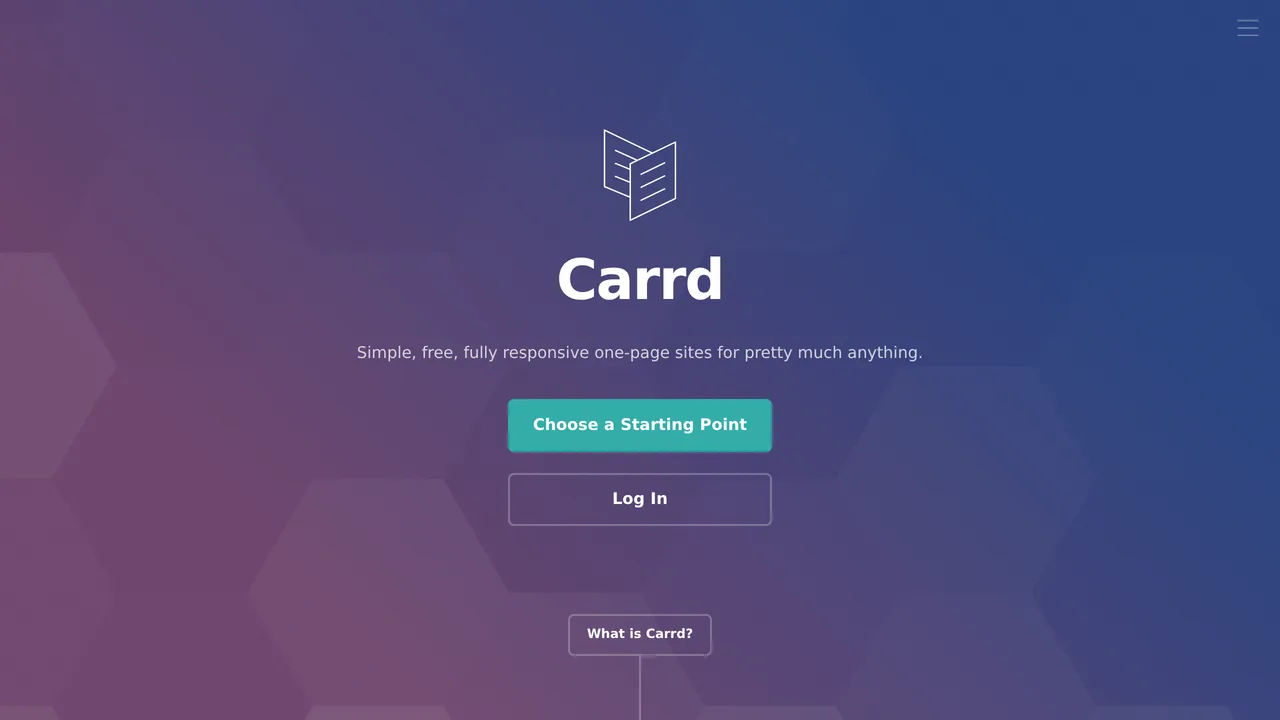
Carrd is one of the most beloved tools on the internet, and for good reason. Nineteen dollars a year for a custom domain, clean mobile-responsive design, and a form builder is genuinely hard to beat. For a personal site, a link-in-bio, or a one-time announcement page, it’s still our recommendation. The page Carrd ships you today will do exactly what it does today, every day, forever.
But that’s also the problem for a different reader: the business owner who built a Carrd page hoping it would bring in customers, and is now waiting. The page is up. The traffic is not. And nobody told them that “having a page” and “having customers” are different products.
This post compares seven Carrd alternatives honestly. Six of them are page builders. The seventh is what we built for the reader who didn’t actually need a better page — they needed the system that turns a page into a customer pipeline.
Who Should (and Shouldn’t) Leave Carrd
Stay on Carrd if your need is genuinely static: a link-in-bio, a coming-soon page, a personal portfolio, a resume site, a single-event landing page. Carrd is wonderful at static, and “static” is exactly the right shape for those problems.
Leave Carrd if what you’re actually trying to do isn’t static at all — you’re trying to acquire customers from search. That’s an ongoing operation, not a one-time setup. The page you launched today gets stale. Google’s algorithm changes monthly. Competitors change their ad copy weekly. The keyword that converted at $4 a click in March is suddenly $9 in June and you don’t know why. A static page is fine for a static problem. Customer acquisition is not a static problem.
Quick Comparison
| Tool | Starts at | Best for | What it solves |
|---|---|---|---|
| Webflow | $14/mo | Designers, content-heavy sites | Real CMS + pixel-level design |
| Wix | $17/mo | Non-technical service businesses | All-in-one: site + booking + store |
| Squarespace | $16/mo | Creators, service businesses | Polished templates + built-in commerce |
| Taplink | Free / paid varies | Instagram/TikTok creators | Mobile-first link-in-bio with payments |
| beehiiv | Free / $43/mo Scale | Newsletter-first creators | Email list + website + monetization |
| Typedream | $15/mo | Indie founders, digital products | Notion-like editing + commerce |
| Launch10 | $59/mo | Anyone running paid search or social ads | Page + ads + tracking + ongoing optimization |
1. Webflow
Tagline: “Make your website a growth engine.” Starts at: $14/month on the Basic plan (annual billing). Free Starter tier available.
Webflow is the serious designer’s answer to Carrd. Instead of dropping elements onto a single canvas, Webflow gives you a visual interface for the underlying web primitives — boxes, flexbox, positioning, breakpoints, CSS classes. That’s the strength and the weakness. You get pixel-level design control and a genuine content management system that supports thousands of entries across multiple collections, with structured fields and relational references. You also get a steeper learning curve than Carrd users expect. Reddit consensus has been consistent for years: Webflow breaks more beginners than any other tool in this list. If you can invest the time, the ceiling is dramatically higher.
Best for: Designers and marketing teams who need a real CMS, clean semantic HTML output, and the ability to rank for many keywords across multiple pages. Key limit: Editor seats, e-commerce, and analytics are all separate line items; a team configuration can exceed $100/month before you notice.
2. Wix
Tagline: “Create a website without limits.” Starts at: $17/month on the Light plan (annual billing).
Wix is the broadest platform on this list. A single Wix subscription gives you a website, a domain, email, appointment booking, a basic online store, email marketing, and SEO tooling — all under one bill. For a service business that wants one vendor instead of five, the convenience is real. Wix has invested heavily in AI-generated site creation (Wix ADI and related products), and the template library is enormous. The tradeoffs are well-documented: Wix sites historically score worse on Core Web Vitals than Squarespace or Webflow, migration out of the Wix ecosystem is limited, and designers tend to dismiss the output as “cheesy” even when it’s perfectly fine for the customer.
Best for: Non-technical service businesses that want one tool to replace a small stack: site + booking + store + email. Key limit: Page weight and SEO have trailed competitors; ecosystem lock-in is stronger than Webflow’s.
3. Squarespace
Tagline: “A website makes it real.” Starts at: $16/month on the Basic plan (annual billing).
Squarespace is the polish play. If you want a site that looks professional without design work, Squarespace templates do more heavy lifting than anything else in this category. The platform bundles scheduling (via Acuity), email campaigns, member areas, and e-commerce — enough to run a real service business, boutique, or creative practice from a single dashboard. The restructured 2025 four-tier pricing (Basic $16, Core $23, Plus $39, Advanced $99) moved some commerce features up-market, so check which tier covers what you actually sell. Design flexibility is less free-form than Webflow or Framer; you’re working within beautifully-designed rails rather than on a blank canvas.
Best for: Creators, restaurants, boutique retailers, photographers, and service businesses that want a polished site plus booking and commerce without picking a separate tool for each. Key limit: Less flexible than Webflow; transaction fees on the Core plan if you sell products.
4. Taplink
Tagline: “More than just a link-in-bio tool.” Starts at: Free Basic tier; PRO and BUSINESS tiers vary by billing cycle.
Taplink is the link-in-bio category done seriously. It’s purpose-built for Instagram, TikTok, and WhatsApp traffic — mobile-first, optimized for conversion, with Stripe and PayPal payments, forms, and messenger integrations baked in. If your traffic comes from social bio links and your audience is shopping on mobile, Taplink out-converts Carrd’s simpler approach on most tested metrics. It isn’t a website builder in the traditional sense; you cannot build a multi-page SEO site or a content-heavy brand presence here. But for “the page my followers tap through to from Instagram,” it’s tailored in a way Carrd isn’t.
Best for: Creators, influencers, and small sellers whose primary traffic source is social media and whose primary goal is conversion on mobile. Key limit: Desktop experience is secondary; not a multi-page or SEO-focused tool.
5. beehiiv
Tagline: “Powering the internet’s best newsletters.” Starts at: Free Launch tier (up to 2,500 subscribers); $43/month Scale at the growth tier.
beehiiv is a Carrd alternative only because beehiiv keeps publishing “Carrd alternatives” articles — which tells you something about where people overlap. It’s a full creator-business platform: newsletter, website, ad network, referral program, paid subscriptions, and monetization tools in one system. If your business is your email list and the website exists mostly to grow that list, beehiiv is unmatched. If you just want a one-page site, beehiiv is massive overkill — the website features are secondary to the email platform, and you’ll pay for capabilities you never touch.
Best for: Newsletter operators, publishers, and creators whose business model is subscription-based and who want the website, list, and monetization stack in one place. Key limit: Not a landing page or website tool first; it’s a newsletter platform with a site module.
6. Typedream
Tagline: “Launch your product in minutes.” Starts at: $15/month on the Launch plan (annual billing). Free tier available.
Typedream feels like Notion with a polish layer. The editor is simpler than Webflow’s, the output looks more modern than Carrd’s, and the platform includes Stripe-based digital product sales without a separate plugin. Typedream has leaned into AI-first onboarding — you can generate a working site from a single sentence — which makes it an easy on-ramp for indie founders shipping an MVP or a templates business. The ceiling is real: smaller template library, fewer integrations, thinner CMS than Webflow or Squarespace. For the specific use case of “I sell a digital product and want a credible site fast,” it punches above its weight.
Best for: Solo founders and indie hackers selling digital products, templates, or courses who want fast publish times and Notion-like editing. Key limit: Smaller ecosystem than Webflow or Squarespace; not proven for SEO-heavy use cases.
7. Launch10 — Carrd Hands You a Page. Launch10 Stays.
Tagline: “The marketing tool that gets better every time you run it.” Starts at: $59/month.
Carrd is $19 a year. We’re $59 a month. That’s the conversation, so let’s have it honestly.
The reason we’re a subscription, not a one-time fee, is that we don’t stop working when your page goes live. We rewrite your ad copy when click-through rate drops. We cut the keyword that’s burning $80 a week and bringing zero leads. We update the page when Google’s AI changes how it reads landing pages — and it changes constantly. Carrd built you a page. We’re running an ongoing operation. Different products, different prices.
Here’s the part most “Carrd alternatives” posts won’t tell you: a landing page in 2026 isn’t really a page anymore. It’s a signal to Google’s ad-targeting AI. Google reads your page to figure out who to send to it — your audience targeting is your page content. A static page is a static signal, and static signals decay. The keywords drift. Competitors change their copy. The ad auction reprices. The Carrd page that worked in March is mistuned by June and there’s nobody minding it.
Launch10 keeps the signal fresh. We feed Google’s AI new audience data, refresh ad copy, retire underperforming keywords, and rewrite the page when the campaign tells us to. Every week you get a short list of decisions in plain English: “Cut this keyword. Test this headline. Add these three zip codes.” Not a dashboard you have to interpret on a Sunday night.
The pages are drawn by real designers — every template hand-crafted by our design team before any AI touches it. The leads land wherever you already work: HubSpot, Mailchimp, Salesforce, Slack, Google Sheets, your own webhook, 5,000+ tools via Zapier.
This isn’t a better Carrd. For a one-page site, Carrd is wildly cheaper and we can’t compete. The honest question is whether you actually just need a page — or whether the page was the visible 10% of what you were really shopping for.
Best for: Business owners, marketers, agencies, and non-technical founders running paid search or social ads who want the page, the campaign, the tracking, and the ongoing optimization as one system. Especially strong for local service businesses (HVAC, plumbing, dental, legal, chiropractic, roofing) and the agencies serving them. Key limit: Not a link-in-bio tool, not a portfolio site builder, not a CMS. If you genuinely just need a static page, the other six tools on this list are the right answer.
How to Choose
- You need a link-in-bio or a one-page personal site: stay on Carrd or switch to Taplink if your traffic is social.
- You need multi-page SEO: Webflow, Squarespace, or Wix — pick by design preference and budget.
- You need a newsletter + site: beehiiv.
- You sell digital products: Typedream.
- You need a system that keeps working after launch — not a static page: Launch10.
Most “Carrd alternatives” listicles stop at the first four questions. If you’re trying to acquire customers from search, the last question is the one that matters — because a static page is a static signal, and a static signal in a moving market is a slow leak. If you’d rather compare tools that generate the page and the campaign together, start with the AI landing page builders built for Google Ads.
Related reading
- Lovable alternatives — for the AI-builder crowd looking for customers, not just a page
- Why your Google Ads aren’t generating leads — diagnose the pipeline before you blame the page
- Launch10 pricing guide — what’s actually included on each tier
Frequently asked questions
Is Carrd good enough for a business landing page?
What's the best Carrd alternative for multi-page sites?
Is Carrd's SEO actually bad?
Can I run Google Ads to a Carrd landing page?
What's the cheapest Carrd alternative with a CMS?

Co-Founder & CEO, Launch10
Greg Hockenbrocht is the Co-Founder and CEO of Launch10. Before Launch10, he was on the executive leadership team at Fundera through its acquisition by NerdWallet, where he led Growth & New Ventures following the company's IPO. Through Illuminated Ventures and work with founders and business owners, he saw a need for Launch10 to help bring clarity, confidence, and ease to digital marketing.