
Lovable Alternatives: 7 AI Builders Worth Evaluating in 2026

Lovable is the most-searched “alternatives” query in the AI builder category in 2026, for reasons that make sense. The product is genuinely impressive, the growth is real (Lovable raised a $330M Series B at a $6.6 billion valuation in December 2025 per TechCrunch), and the user base includes Klarna, Uber, Zendesk, and Deutsche Telekom. For people building apps, dashboards, and internal tools, Lovable is one of the strongest products in the category.
But there’s a different reader landing on “Lovable alternatives” pages every day, and they’re not really shopping for an app builder at all. They’re a business owner. A marketer. A founder whose job is “more customers, more leads, more revenue.” Somebody told them AI could build a website now, they tried Lovable, they got something that looked like a website, and they’re still waiting for the phone to ring. The page wasn’t the bottleneck. The whole system around the page was — keyword research, ad campaigns, tracking, attribution — and Lovable was never built to ship that.
Most people searching “Lovable alternatives” want one of three things: cleaner code output, more predictable pricing, or a different category of tool entirely because their real problem isn’t building apps. This list covers all three honestly.
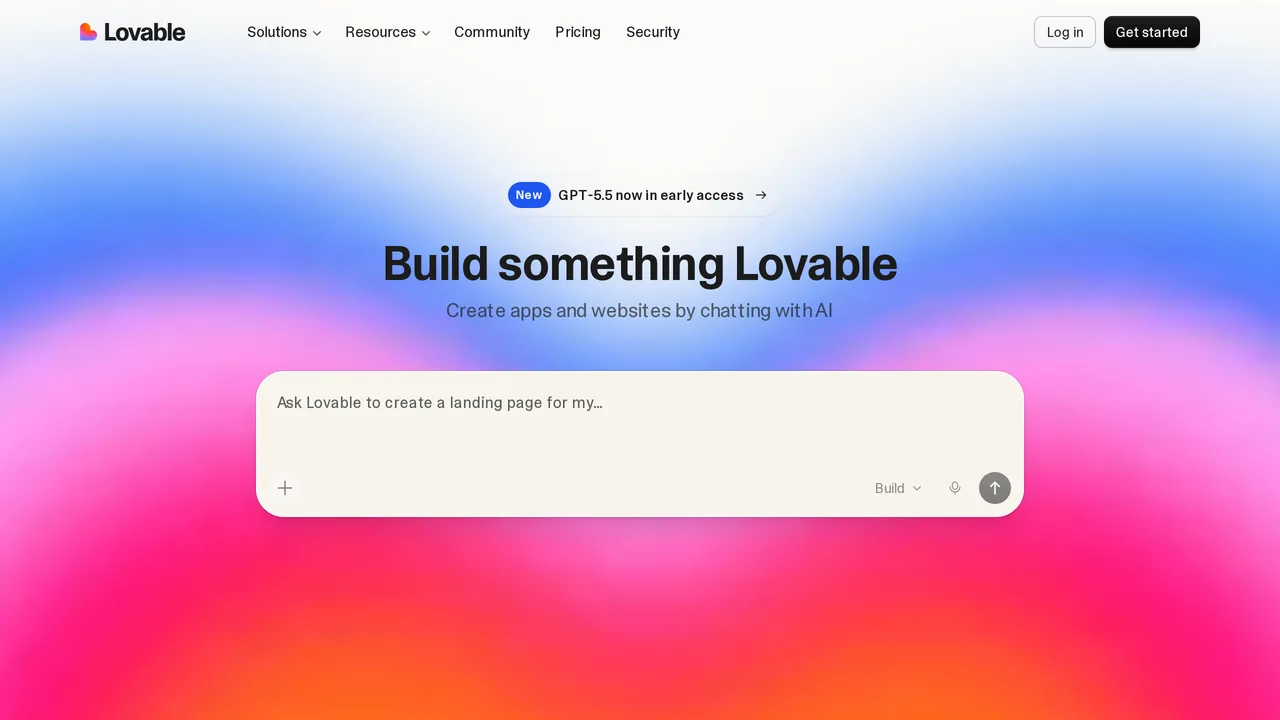
Who Should (and Shouldn’t) Leave Lovable
Stay on Lovable if you’re shipping software — apps, prototypes, dashboards, internal tools. Lovable’s code quality is genuinely good and getting better. If your job spans the categories Lovable spans, it’s a strong tool.
Leave Lovable if the job you came to do isn’t shipping software. If you’re trying to acquire customers from Google or Meta, the work isn’t building a thing — it’s running a campaign. App builders compete on developer ergonomics. You don’t need developer ergonomics. You need ad clicks that turn into paying customers, and that’s a different category of product.
For the head-to-head Launch10-vs-Lovable feature comparison, see our Lovable vs Launch10 deep-dive.
Quick Comparison
| Tool | Starts at | Best for | What it solves |
|---|---|---|---|
| Bolt.new | $25/mo | Full-stack prototypes | Fastest in-browser scaffolding |
| v0 (Vercel) | $20/mo | React/Next.js on Vercel | Best UI component output |
| Replit | $20/mo | Beginners, multi-language | Cloud IDE + agent + runtime |
| Cursor | $20/mo | Professional developers | AI editing in real codebases |
| Builder.io | Free + credits | Teams with design systems | Figma-to-code with governance |
| Superblocks | $29/mo | Enterprise internal tools | Governed tools with SSO/RBAC |
| Launch10 | $59/mo | Anyone running paid search or social ads | Page + ads + tracking + ongoing optimization |
1. Bolt.new
Tagline: “Create stunning apps & websites by chatting with AI.” Starts at: $25/month on the Pro plan (10M tokens/month, rollover). Free tier available.
Bolt is the most common head-to-head with Lovable and has been for a year. Lovable tends to win on code quality, GitHub sync, and out-of-box compliance; Bolt tends to win on framework flexibility and in-browser runtime via StackBlitz WebContainers. The April 2026 cycle brought Claude Opus 4.7 to Bolt with a 2x credits promo, a “Design Systems” launch with Storybook integration, and a v1 Agent deprecation that force-migrates legacy projects to Claude Agent on August 3, 2026. The token-burn complaint remains the dominant switching driver — reviewers and Trustpilot users report debug loops consuming millions of tokens without resolving the underlying bug. bolt.diy, the MIT-licensed StackBlitz-blessed fork, is the community escape hatch for developers priced out of tokens.
Best for: Founders and teams who want Lovable-style prompt-to-app speed with a more flexible framework ecosystem and visible code. Key limit: Context collapses on projects with fifteen to twenty components; token economics punish debug-heavy iteration.
2. v0 (by Vercel)
Tagline: “Prompt. Build. Publish.” Starts at: Free tier with $5 credits; $20/month Premium; Team $30/user/month.
v0 rebranded from v0.dev to v0.app in August 2025 and repositioned from component generator to agentic full-stack app builder. The February 2026 relaunch added GitHub repo imports, a Git panel with PR workflows, and native Snowflake and AWS database integrations — pushing v0 toward production-readiness. The tradeoff remains Vercel ecosystem lock-in (native output is Next.js + Tailwind + shadcn/ui) and token-based billing that replaced the flat $20 unlimited plan in May 2025. Note the April 2026 Vercel security incident for enterprise-readiness conversations.
Best for: React and Next.js developers deployed on Vercel who prioritize UI component quality and want the tightest repo-to-deploy feedback loop. Key limit: Heavy framework lock-in; non-React output means manual rewrite; token pricing drains fast on iteration.
3. Replit
Tagline: “From idea to deployed app.” Starts at: $20/month Core (annual, $25 Agent credits). Free tier available.
Replit is the only option on this list that ships a full cloud IDE beneath the AI agent. You can drop into the code at any time, run Python, Go, Node, or anything else you need, and deploy from the same browser tab. For educators, students, and full-stack learners, Replit is the default because the agent, the runtime, and the editor are one environment — not three separate tools wired together. The Replit Agent handles zero-to-deployed for CRUD apps and simple SaaS prototypes well; on long autonomous builds it remains probabilistic.
Best for: Teachers, students, and developers who want cloud-hosted development plus AI assistance, especially for multi-language projects. Key limit: Agent quality degrades on long autonomous sessions; hosting is on Replit, migration out is nontrivial.
4. Cursor
Tagline: “The best way to code with AI.” Starts at: Free Hobby; $20/month Pro; Pro+ $60; Ultra $200; Teams $40/user.
Cursor is the professional developer’s upgrade from Lovable. It’s a VS Code fork with AI editing at every layer — inline autocomplete, multi-file agent edits, repo-wide context. For projects too large for Lovable’s context window, Cursor is the standard next step. The adoption backs this: JetBrains’ 2026 developer survey shows eighteen percent of developers use Cursor at work. The limit is obvious: Cursor assumes you can already code and have an existing repository. It will not scaffold a project for a non-developer.
Best for: Working software engineers who want AI pair programming operating on real production codebases. Key limit: No scaffolding for non-developers; requires an existing project; credit-based billing after the June 2025 change is less predictable than flat subscriptions.
5. Builder.io (Fusion)
Tagline: “One platform for design and code.” Starts at: Free tier with 25 daily Agent Credits; paid tiers with 500+ credits.
Builder.io is a different shape of Lovable alternative. Instead of generating a new app from a prompt, Builder.io Fusion (launched November 2025) generates code that fits into an existing repository and design system. The output comes as reviewable PRs, the code matches your patterns, and you get SOC 2 Type II plus Figma-to-code with design-system awareness. For engineering teams with an established codebase, that’s a meaningfully different workflow from Lovable’s prompt-to-new-app model.
Best for: Engineering teams with an existing codebase and design system who want AI-generated UI as reviewable, pattern-matched PRs. Key limit: Not standalone — requires the existing repo and design system to shine; wrong tool for greenfield MVPs.
6. Superblocks
Tagline: “Build tools 10x faster for a fraction of the cost.” Starts at: Free tier; $29/month Starter; Pro $49/month; Enterprise custom.
Superblocks is for a narrower audience than the rest of this list — IT buyers at mid-market and enterprise companies building governed internal tools. SSO, RBAC, Git-based workflows, and Cloud-Prem deployment that keeps AI inference inside the customer’s cloud perimeter are first-class features. Most Lovable users won’t need Superblocks; teams whose first question is “can we put this on SSO and audit-log everything” will find it the most honest answer on this list.
Best for: Enterprise and mid-market IT teams building internal applications on production data with governance requirements. Key limit: Overkill for solo founders or small teams; consumer-facing apps and marketing sites are not the target.
7. Launch10 — Lovable Picked Breadth. We Picked Depth.
Tagline: “The marketing tool that gets better every time you run it.” Starts at: $59/month.
We could have built an app builder. The underlying technology is the same. We didn’t, because the business owners, marketers, and non-technical founders we built this for needed something narrower and deeper.
Lovable picked breadth. They build apps, dashboards, internal tools, marketing pages — anything you can prompt for. That’s a real product strategy and they’re executing it well. We picked depth on one thing: turning a stranger on Google or Meta into a paying customer. That means we don’t ship a CRM, a kanban board, a Discord clone, or a SaaS scaffold. We ship the entire marketing funnel — keyword research, the page, the ad campaign, the tracking, the lead delivery — as one system that gets better every campaign you run.
Lovable also makes a pile of choices that quietly tell you who they’re for: GitHub sync, visible code, framework flexibility, the option to take your project anywhere. Those are great features for someone who wants to read code. People asked us for GitHub sync constantly. We said no, and we’ll keep saying no — that’s not who this is for. If you wanted to read code, you’d already be reading code. You’re here because you want more customers. So we hide the codebase entirely and put the parts that actually matter to your business in front of you: ad spend, cost per lead, return on ad spend, customers driven.
Here’s what depth on one thing actually buys you. In 2026, your landing page isn’t really a page anymore — it’s a signal to Google’s ad-targeting AI, which scans your page to figure out who to send to it. A general-purpose AI builder writes whatever sounds nice. We engineer the page to feed the algorithm: declared audience, declared use case, declared intent bucket. That feeds keyword research with real cost data, ad copy with the right extension structure (sitelinks, callouts, structured snippets — the things that quietly cut your cost per click 30–40%), tracking that ties every click to the form fill and the dollar amount when they pay you, and weekly recommendations in plain English: “Cut this keyword. Test this headline. Add these zip codes.” Not a dashboard. Decisions.
The pages are drawn by real designers — every template hand-crafted by our design team before AI fits your business into it. Leads land in HubSpot, Salesforce, Mailchimp, Slack, Google Sheets, your own webhook — 5,000+ tools via Zapier.
For the deep-dive head-to-head, see Lovable vs Launch10. For the dedicated positioning page, see our Lovable alternative for customer acquisition.
Best for: Business owners, marketers, agencies, and non-technical founders running paid search or social ads. Especially strong for local service businesses (HVAC, plumbing, dental, legal, chiropractic, roofing) and the agencies serving them. Key limit: No app builder, no dev tool, no code-export platform. If your job is shipping software — even marketing software — Lovable is the right answer and we’re not.
How to Choose
- You’re prototyping an app for a non-technical stakeholder: Lovable or Bolt. Lovable for cleaner code, Bolt for faster full-stack scaffolding.
- You’re a React/Next.js developer deploying on Vercel: v0.
- You’re an educator, beginner, or multi-language builder: Replit.
- You’re a professional developer in a real codebase: Cursor.
- You’re an engineering team with an existing design system: Builder.io.
- You’re enterprise IT building internal tools with governance requirements: Superblocks.
- You want a campaign that brings customers, not an app to ship: Launch10.
The last bullet is the one most “Lovable alternatives” lists miss, and the one that actually matters if your business model doesn’t depend on shipping software at all.
Related reading
- v0 alternatives — the same question for Vercel’s AI builder
- AI landing page builders for Google Ads — what to look for when AI pages have to actually convert paid traffic
- Why your Google Ads aren’t generating leads — the real reasons before you blame the page
Frequently asked questions
What happened with the Lovable security incident in April 2026?
What's the best Lovable alternative for non-technical founders?
Is Cursor a Lovable alternative?
Can Lovable build landing pages that rank in Google Ads?
Is Lovable still worth it despite the credit complaints?

Co-Founder & CEO, Launch10
Greg Hockenbrocht is the Co-Founder and CEO of Launch10. Before Launch10, he was on the executive leadership team at Fundera through its acquisition by NerdWallet, where he led Growth & New Ventures following the company's IPO. Through Illuminated Ventures and work with founders and business owners, he saw a need for Launch10 to help bring clarity, confidence, and ease to digital marketing.